Stress is a signal – how StressInsight works with stress for individuals and organizations.

Why Stressinsight exists

StressInsight exists to change how stress at work is understood — and how people and organizations respond to it.

Too often, workplace stress is treated as a personal weakness to manage, or as a cost to minimize.
We approach it differently: as information.

A signal that demands, expectations, or pressures have exceeded what people and systems can sustainably adapt to.

Our mission is to help individuals and organizations make sense of that signal — and use it to restore clarity, stability, and sustainable performance.

For individuals, this means understanding how stress shapes perception, decisions, and energy — so they can respond with more orientation and less self-blame.

For organizations, it means examining how work is structured, led, and experienced under pressure — and identifying where change actually matters.

Work should not require constant self-sacrifice to function.
It should be effective because it is sustainable — for people and for the organizations they work in.

Our approach

Stress is rarely caused by a single factor — and it is rarely resolved by a single solution.

Much stress advice focuses on one layer at a time:
techniques to calm the body, habits to improve productivity, psychological insight, or workplace tips.
Each of these can be useful.

Chronic stress, however, develops when biological responses, perception, and working conditions interact over time.

StressInsight works across these layers — in sequence, not in isolation.


1. Stabilize before acting

Creating the conditions for clarity

When stress is high, the nervous system prioritizes survival over reflection.
In that state, people tend to react rather than interpret.

Our first step is therefore not change, but stabilization:
helping people reduce hyperarousal enough to think, notice signals, and make decisions without being driven by urgency.

This creates the conditions for clarity — not as an end goal, but as a starting point.


2. Restore adaptive capacity

Rebuilding energy, flexibility, and recovery

Chronic stress gradually depletes energy, attention, and cognitive flexibility.
Rather than pushing resilience or endurance, we focus on restoring capacity.

This includes improving recovery, reducing cognitive overload, increasing predictability, and supporting emotional and mental stability over time.

As capacity returns, people can respond to demands with flexibility instead of strain.


3. Adjust the conditions that sustain stress

Addressing pressure where it actually arises

Lasting change rarely comes from individual effort alone.

Stress often persists because of how work is structured, led, and experienced — including workload, role clarity, decision pressure, autonomy, communication patterns, conflict, and broader organizational culture.

We support individuals and organizations in identifying and adjusting these conditions, so pressure is managed where it actually originates — not where it merely shows up.

By working with stress at the level of regulation, capacity, and context, Stressinsight supports responses that are evidence-based, realistic, and sustainable — not just in the moment, but over time.

From Understanding to Action — How Support Unfolds Over Time

Stress rarely resolves all at once.
People and organizations need different kinds of support at different moments — and often need help understanding where they stand and what deserves attention next.

Stressinsight is therefore built as a guided system:
not a collection of tools, but a way of supporting progress over time — without pressure, urgency, or forced change.


1. Orientation — Making Stress Understandable

Creating a shared, non-blaming frame

The first step is understanding.

We help people make sense of stress as a signal — biologically, psychologically, and in the context of work — so it can be interpreted without blame or alarm.

This orientation supports people in:

  • recognizing recurring stress patterns

  • understanding why they arise

  • developing a clear, shared language for pressure at work

Understanding does not remove stress — but it changes how people relate to it.


2. Stabilization — Support When Stress Is High

Restoring enough steadiness to think and decide

When stress escalates, the priority is not change, but stability.

Support at this stage focuses on interrupting escalating stress responses, restoring perspective, and creating enough calm to think and decide without reacting under stress.

This is often where people regain the capacity to pause — and to choose their next steps more deliberately.


3. Guided Progression — Staying Oriented Over Time

Turning understanding into direction

Understanding and stabilization are often not enough on their own.

People may still wonder:

  • Am I focusing on the right thing?

  • Is this the moment to change something — or to wait?

  • Why does stress keep returning here?

Guided progression provides continuity.

Through structured guidance and regular reflection moments, we support individuals and organizations in:

  • reassessing where they stand as conditions change

  • revisiting priorities without urgency

  • translating insight into realistic next steps

  • avoiding cycles of overreaction, avoidance, or overload

Progress remains steady — without adding pressure or new expectations.


4. Change — Addressing What Sustains Stress

Adjusting conditions, not just coping strategies

When stress persists, it usually points to conditions that need adjustment.

We support individuals and organizations in identifying where stress is sustained — personally, relationally, or structurally — and in making proportionate changes that restore clarity, coordination, and sustainable performance.

Change is guided by understanding — not imposed as a default response.


Why this approach matters

By working across understanding, stabilization, guidance, and change, StressInsight supports responses to stress that are realistic, evidence-based, and sustainable — not just in the moment, but over time.

Our history

About stressinsight

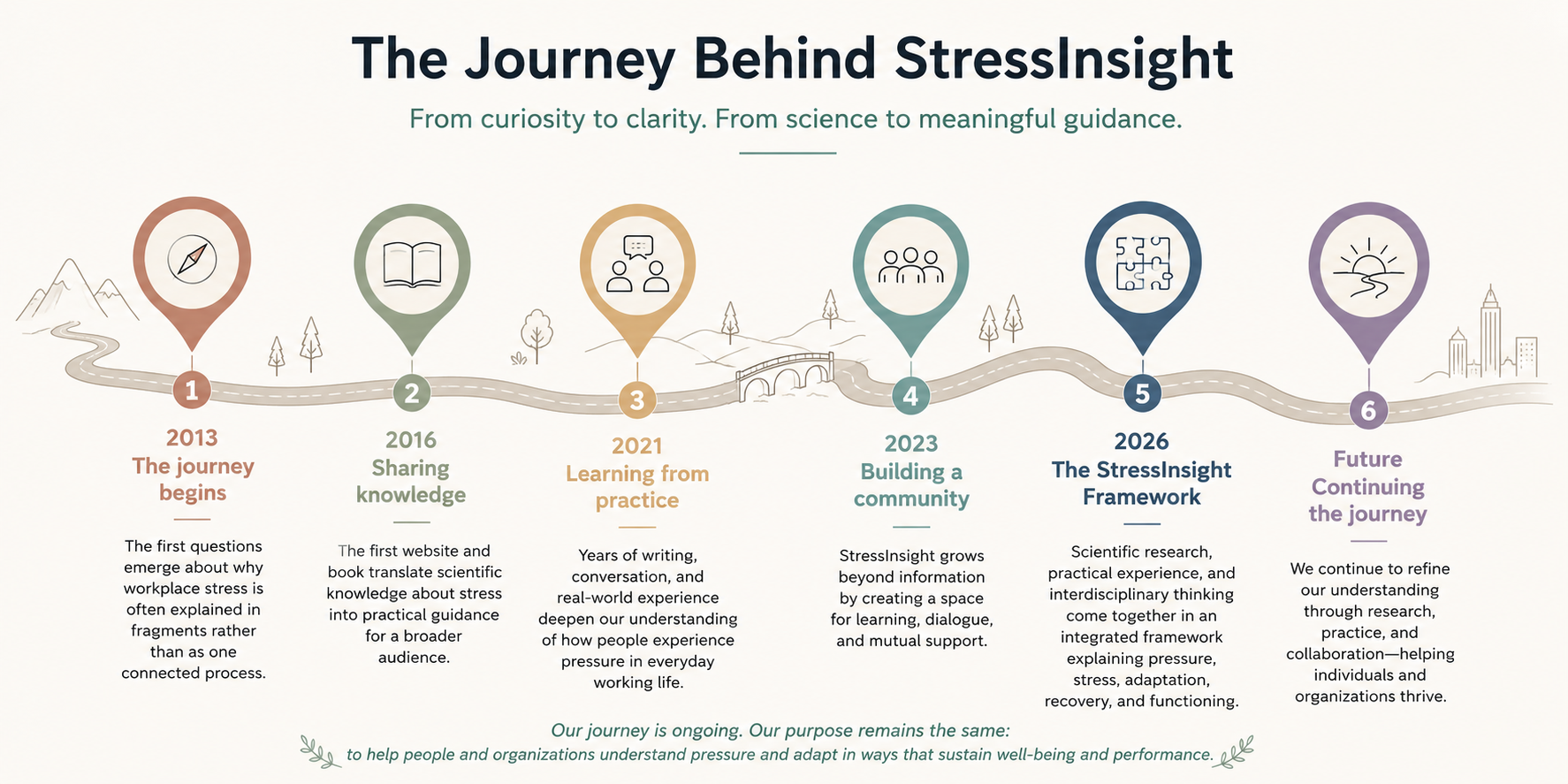
Stressinsight has evolved over more than a decade — shaped by a growing understanding of what people actually need when dealing with stress.

The work began in 2013 within the Biosphere Science Foundation (BSF), a non-profit we co-founded to translate scientific knowledge into practical insight. Early on, stress emerged as a central theme. Research in neuroscience and physiology offered powerful explanations for how people adapt — and fail to adapt — under sustained pressure.

What quickly became clear was this:
the science was strong, but largely inaccessible to everyday working life.

To close that gap, we launched a dedicated Stressinsight platform and published a book on stress in the Netherlands. The response confirmed the need: people valued clarity, scientific grounding, and explanations that treated stress as more than a personal weakness.

At the same time, limits became visible.
Static content could explain stress — but it could not adapt to people’s changing situations.

Stress is not a one-time problem. It evolves with workload, roles, relationships, and organizational context. People wanted understanding that could grow with them, not answers frozen in a single publication.

This insight led to the next phase: a membership-based stress journal, inspired by traditional newspapers rather than self-help programs. It allowed us to share new research, interpretations, and reflections as they emerged — supporting ongoing sense-making rather than one-off solutions.

In 2021, Stressinsight became fully independent from BSF. With that independence came a clearer focus — and a decisive realization:

information alone is not enough.

People did not just want to read about stress.
They wanted help understanding their own stress — in context, over time, and without simplistic advice.

That realization led to the launch of the Stressinsight Community in 2023: a space where scientific insight, lived experience, and guided reflection could come together. Here, stress could be discussed as a complex signal — not something to suppress, fix quickly, or moralize.

Since then, Stressinsight has continued to evolve from a platform that shares knowledge to a system that supports understanding, orientation, and proportionate change — for individuals and organizations alike.

What has remained constant throughout is the goal:

to bring scientific insight into everyday working life —
in ways that respect human limits and support sustainable performance.

Meet the team

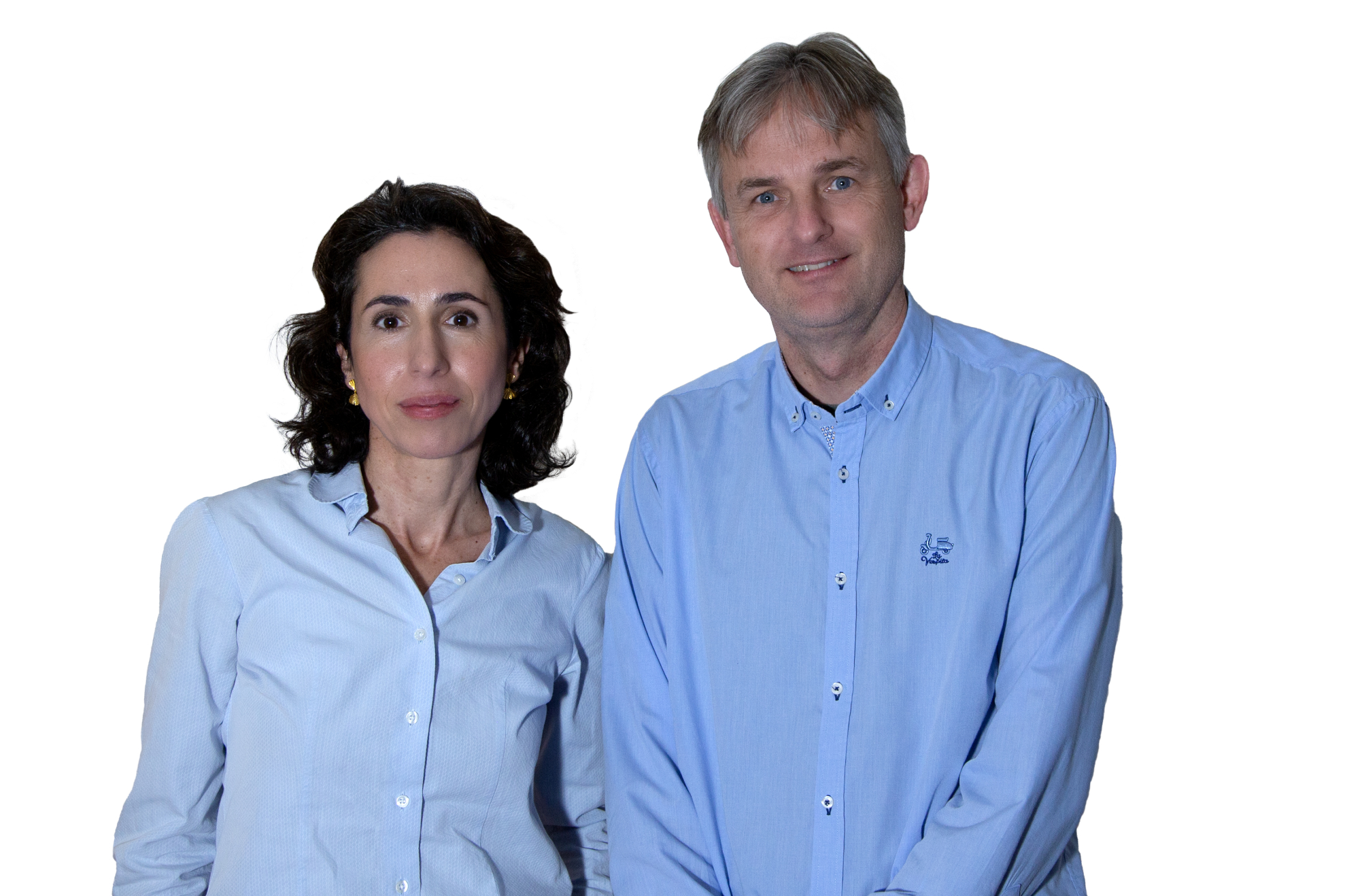
Founder of stressinsight

Erwin van den Burg

Co-founder — Neuroscientist & Workplace Stress Specialist

Erwin is a neuroscientist specializing in stress physiology and adaptation. His work focuses on how chronic pressure shapes perception, decision-making, and behavior — especially in complex work environments.

At Stressinsight, he translates neuroscience into practical understanding, helping individuals and organizations make sense of stress as a signal rather than a personal failure, and respond in ways that are realistic and sustainable.

Founder of stressinsight

Inés Gomez Campos

Co-founder — Psychiatrist

Inés is a psychiatrist with extensive clinical experience supporting individuals and teams under sustained psychological pressure. Alongside her work at StressInsight, she maintains her own clinical practice, where work-related stress is a frequent and serious concern.

Her perspective grounds StressInsight’s work in clinical reality, ensuring that guidance remains humane, responsible, and aligned with mental health care — especially where stress intersects with anxiety, exhaustion, or loss of functioning.