A new perspective on workplace stress


Why Stressinsight exists
Despite growing awareness, workplace stress remains a major cause of absenteeism, reduced wellbeing, and lost performance. Organisations continue to invest in prevention, and individuals continue to look for ways to cope, yet the problem remains widespread.
Many approaches begin with the stress response itself, rather than with the conditions in which stress develops.
Stressinsight takes a different starting point. Rather than looking at stress in isolation, we consider it in the context of the demands people and organisations face, and what those demands reveal about the way work is functioning.
This creates a stronger basis for deciding what needs attention and what is most likely to help.
Work places ongoing demands on individuals and organisations. Meeting those demands requires adaptation, and stress is a natural part of that process.
When adaptation is successful and recovery is sufficient, the stress response gradually subsides and capacity is restored for future challenges. Problems arise when demands continue to arrive faster than recovery can restore that capacity.
Over time, the ability to adapt begins to weaken, making it harder to respond effectively to new challenges. Workplace stress is therefore not only about today's demands, but also about preserving the capacity to meet tomorrow's.
This is why Stressinsight focuses on sustainable adaptation. Understanding how work demands, stress, adaptation, and recovery interact over time creates the foundation for recognising early signs that the capacity to adapt is becoming strained, supporting both current performance and long-term functioning.
Stressinsight is built on decades of research in stress physiology, psychology, neuroscience, organisational behaviour, and human adaptation.
This knowledge is brought together in a single conceptual framework that explains how work demands, stress, adaptation, and recovery interact over time. By integrating these perspectives, the framework provides a coherent understanding of workplace stress across both individuals and organisations.
This scientific foundation bridges research and practice, creating a basis for guidance that is both scientifically grounded and relevant to everyday working life.
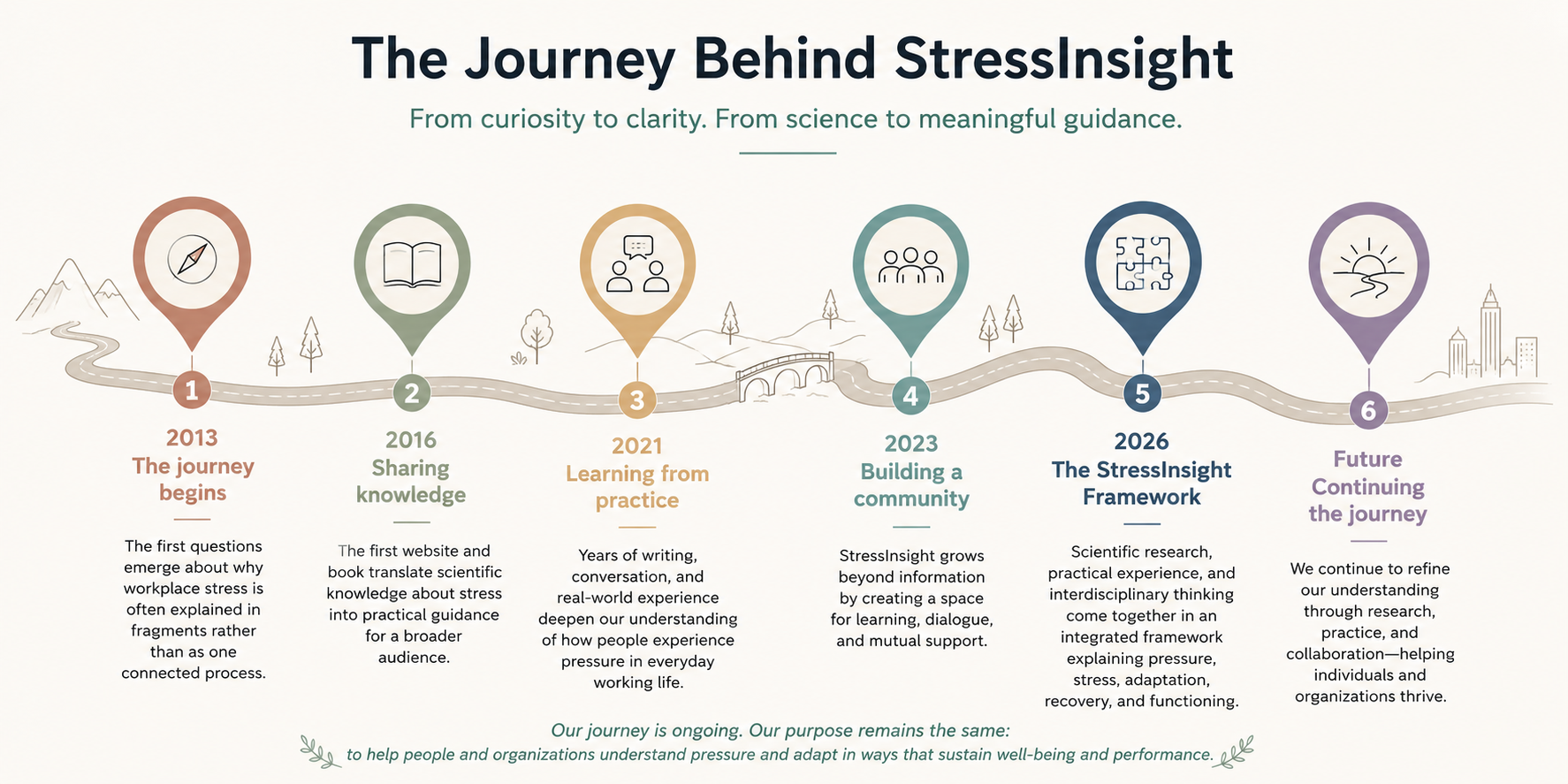
Stressinsight did not begin as a business idea. It began with a simple question:
Why do so many people continue to struggle with workplace stress despite the growing amount of scientific knowledge and practical advice?
That question led to years of studying research across multiple disciplines, exploring how people and organisations respond to workplace demands, and gradually bringing those insights together into a single conceptual framework.
Today, StressInsight continues to evolve through research, practical experience, and ongoing dialogue with the individuals and organisations it supports.
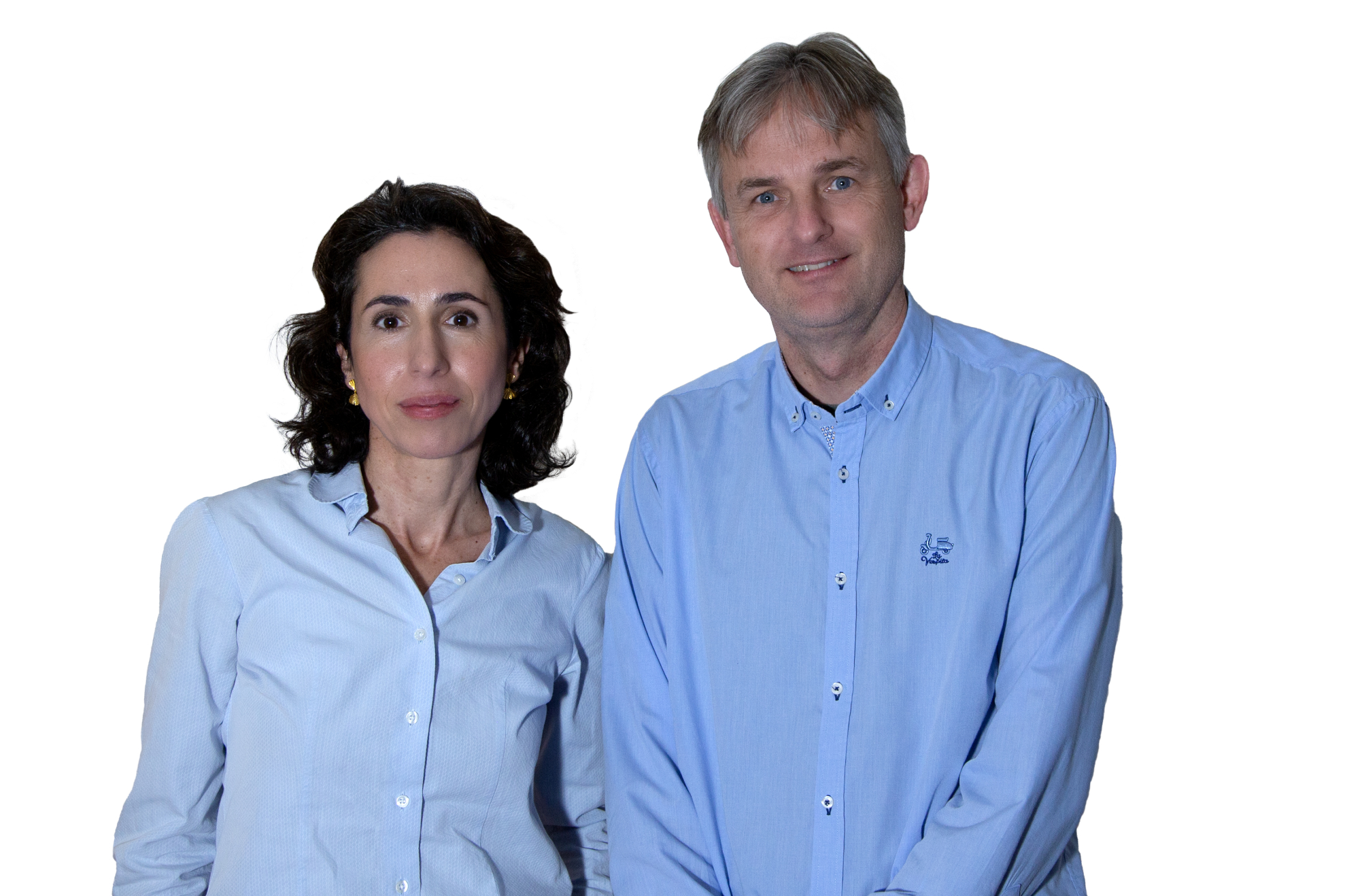
Stressinsight was founded by neuroscientist Erwin van den Burg, whose research, writing, and systems perspective led to the development of the integrated conceptual framework that forms its foundation.
Throughout that process, psychiatrist Inés Gomez Campos has provided critical review and clinical perspective, helping to challenge assumptions, refine ideas, and ensure the framework remains relevant to the realities of mental health and workplace wellbeing. she also wrote blog articles on psychiatry and personality.
As Stressinsight continues to grow, her expertise will become an integral part of the membership community, complementing the scientific framework with clinical insight and practical guidance.

Neuroscientist & Workplace Stress Specialist
Founder of Stressinsight and developer of its integrated conceptual framework. His work focuses on translating scientific research into practical guidance that helps individuals and organisations understand workplace stress and adaptation.

Psychiatrist
Psychiatrist with extensive clinical experience in work-related mental health. She contributes clinical perspective to Stressinsight, helping ensure that its guidance remains scientifically grounded, practical, and person-centred.
Workplace stress is unlikely ever to disappear. Work will continue to evolve, organisations will continue to face new challenges, and people will continue to adapt to changing demands.
Our vision is a world in which individuals and organisations understand workplace stress more clearly, recognise early signs of strain, and make informed decisions before problems become overwhelming.
Stressinsight will continue to develop its scientific framework, educational resources, practical tools, and professional guidance. By continuing to integrate scientific knowledge with practical guidance, Stressinsight aims to contribute to healthier, more resilient, and more sustainable workplaces.