
Deep Breathing for Stress: Why Your Breath Changes Under Pressure and How to Calm It
One of the first physical changes many people notice during stressful situations is a change in their breathing.
A difficult conversation.
An important presentation.
Unexpected bad news.
Breathing becomes faster and shallower. Sometimes it may feel difficult to take a full breath.
This reaction is a normal part of the stress response. As pressure increases, the nervous system becomes more active and breathing adjusts accordingly.
The encouraging part is that breathing is one of the few aspects of the stress response that we can consciously influence.
By slowing the breath, it is possible to activate physiological systems that help calm the body and reduce feelings of tension.
The situation itself may remain unchanged. The deadline, uncertainty, or difficult conversation is still there. What often changes is the level of physiological activation and the ability to approach the situation with greater calm and clarity.
Key Takeaways
- Faster breathing is a normal part of the stress response.
- Adrenaline increases breathing rate to support the body's response to challenges.
- Psychological pressures can trigger the same breathing changes as physical threats.
- Slow breathing activates the parasympathetic nervous system, which helps calm the body.
- Breathing exercises are particularly useful during moments of acute stress.
- Breathing techniques can help regulate the stress response, but long-term stress often requires attention to the pressures that keep activating it.
Why Does Breathing Speed Up During Stress?
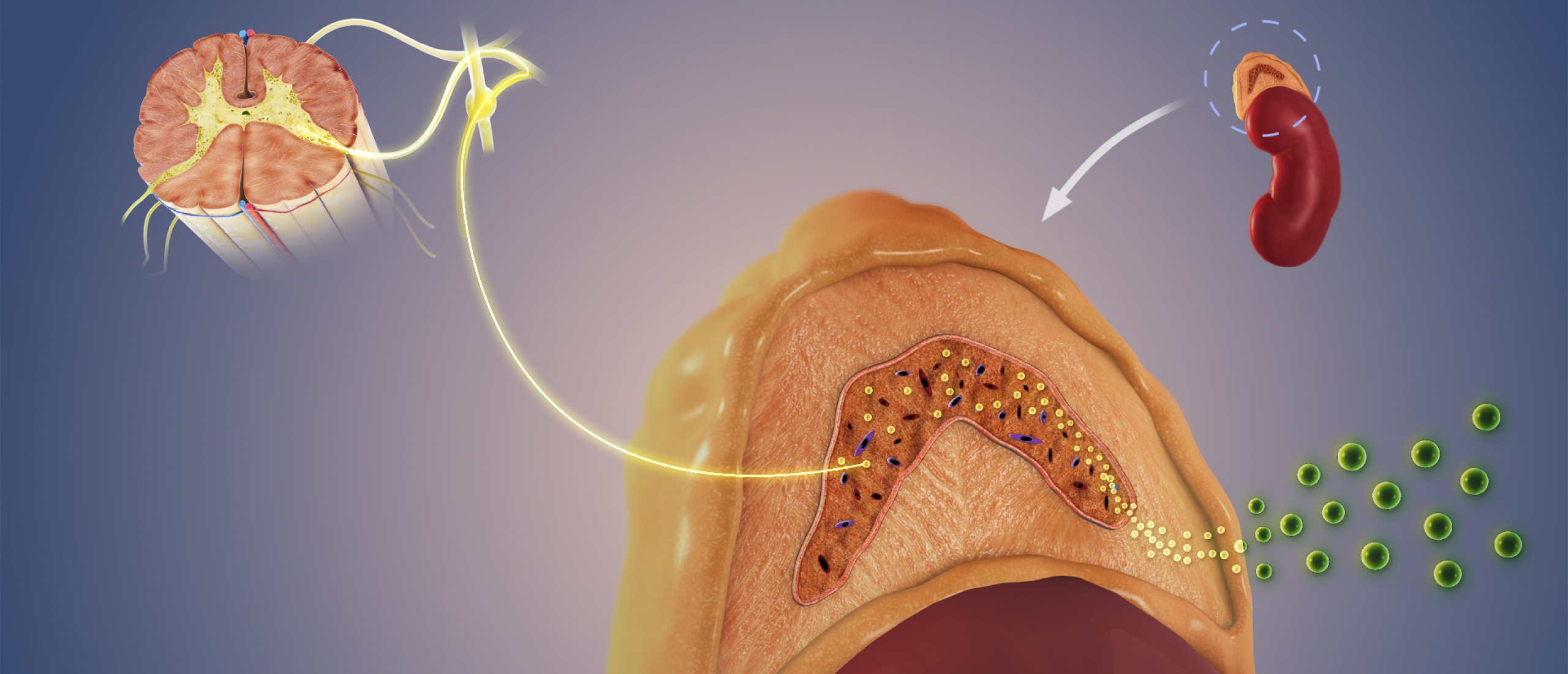
When the brain detects a challenge, the sympathetic nervous system becomes active.
One consequence is the release of adrenaline.
Adrenaline increases alertness and helps mobilize energy. Breathing becomes faster so that oxygen can be delivered more efficiently throughout the body.
This response evolved to support physical action in situations where rapid reactions were important.
Although modern pressures are often psychological rather than physical, the same systems remain active.
A presentation, workplace conflict, financial uncertainty, or an important decision can all produce similar changes in breathing.
Breathing Is Part of a Broader Stress Response
Changes in breathing rarely occur on their own.
Many people also notice:
- A faster heart rate
- Muscle tension
- Sweaty palms
- Increased alertness
- A feeling of restlessness
These reactions are coordinated by the nervous system and reflect the body's response to perceived demands.
Understanding this can sometimes make stress-related symptoms feel less mysterious and less alarming.
Why Breathing Is Different
Most components of the stress response operate automatically.
We cannot directly control the release of stress hormones or consciously instruct the heart to slow down.
Breathing occupies a unique position.
It continues automatically throughout the day, yet it can also be influenced voluntarily.
This creates a direct link between conscious behaviour and the autonomic nervous system.
That link is one reason breathing exercises have been used for centuries in meditation, yoga, relaxation training, and more recently in stress management programs.
How Slow Breathing Helps Calm the Body
When breathing slows, activity within the parasympathetic nervous system increases.
This branch of the nervous system helps the body move toward a calmer state.
As parasympathetic activity increases:
- Heart rate slows
- Blood pressure may decrease
- Muscle tension can lessen
- Feelings of anxiety often become less intense
Many people notice these effects within minutes.
This makes breathing exercises particularly useful when stress levels rise suddenly and a calmer state is needed quickly.
When Breathing Exercises Are Most Useful
Breathing techniques can be remarkably effective when the nervous system has become temporarily overactivated.
Examples include:
- Public speaking
- Job interviews
- Important meetings
- Difficult conversations
- Examinations
- Acute anxiety
- Moments of frustration or overwhelm
In these situations, a few minutes of slow breathing may reduce physiological activation enough to improve concentration, decision making, and emotional control.
For many people, breathing exercises become a practical way of creating a small pause between the stressor and their response to it.
Three Breathing Techniques for Acute Stress
There is no single breathing technique that works best for everyone.
The most useful technique is often the one you find comfortable and are willing to practice consistently.
Diaphragmatic Breathing
Diaphragmatic breathing, often called belly breathing, encourages deeper and slower breaths.
Place one hand on your chest and the other on your abdomen.
As you inhale, allow your abdomen to expand while keeping your chest relatively still.
One simple rhythm is:
- Inhale for four seconds
- Hold for four seconds
- Exhale for six seconds
Repeating this cycle for several minutes often produces a noticeable calming effect.
Box Breathing
Box breathing uses equal intervals for inhalation, breath holding, and exhalation.
The pattern is:
- Inhale for four seconds
- Hold for four seconds
- Exhale for four seconds
- Hold for four seconds
This approach is commonly used in high-pressure environments where maintaining focus and composure is important.
Mindful Breathing
Mindful breathing involves paying attention to the experience of breathing itself.
Notice:
- The sensation of air entering and leaving the nose
- The movement of the chest
- The movement of the abdomen
By directing attention toward the breath, many people find it easier to step away from repetitive thoughts and worries.
What About Hyperventilation?
Some people respond to stress by breathing very quickly.
This is known as hyperventilation.
When breathing becomes excessively rapid, carbon dioxide levels in the blood decrease.
This can produce symptoms such as:
- Dizziness
- Tingling sensations
- Light-headedness
- Feelings of unreality
- Increased anxiety
These symptoms can be unsettling and sometimes create a self-perpetuating cycle in which physical sensations increase anxiety and anxiety further accelerates breathing.
Learning to slow the breath can help interrupt this cycle.
Breathing Changes the State, Not the Situation
Breathing exercises can have a meaningful effect on the nervous system.
They can slow physiological activation, reduce tension, and create greater mental clarity.
The underlying source of pressure, however, may still be present.
A workload remains a workload.
An unresolved conflict remains unresolved.
Financial uncertainty remains uncertain.
What changes is the state from which those challenges are approached.
This distinction is important because it helps explain why breathing exercises can be highly effective in the moment while still being only one part of a broader approach to stress management.
Breathing and Long-Term Pressure and Stress
People experiencing chronic stress often hope that a single technique will solve the problem entirely.
Long-term pressure is usually more complex.
Workload, uncertainty, lack of control, unresolved conflict, poor recovery, and other pressures may continue to activate the stress response day after day.
In these situations, breathing exercises remain valuable.
They can reduce activation, improve clarity, and create opportunities for recovery.
At the same time, understanding the pressures that repeatedly trigger the stress response becomes increasingly important.
Managing stress over the longer term often involves both regulating the stress response and addressing the conditions that continue to activate it.
Why Breathing Still Matters
Few stress-management techniques can influence the nervous system as quickly as slow breathing.
A few minutes of deliberate breathing may help reduce physiological activation and improve the ability to think clearly during demanding situations.
That makes breathing a useful tool whenever pressure rises suddenly and a calmer response is needed.
Want to Better Understand the Signs of Too Much Pressure?
Changes in breathing are often one of several signals that pressure is beginning to affect the body and mind.
The free guide Signs You're Under Too Much Pressure explores the physical, emotional, cognitive, and behavioural changes that can occur when pressure remains elevated for extended periods.
It can help place symptoms such as rapid breathing within the broader context of stress, recovery, and daily functioning.
Frequently Asked Questions
Why does stress make me breathe faster?
Stress activates the sympathetic nervous system and increases adrenaline release. One result is a faster breathing rate that supports the body's response to challenges.
Can deep breathing reduce stress immediately?
Many people notice reduced physiological activation within minutes. Slow breathing increases parasympathetic activity and helps calm the body.
What is the best breathing exercise for stress?
There is no single best technique. Diaphragmatic breathing, box breathing, and mindful breathing all have evidence supporting their use.
Can breathing exercises help with anxiety?
Yes. Slow breathing can reduce physiological activation and help interrupt cycles of escalating anxiety and hyperventilation.
Can breathing exercises cure chronic stress?
Breathing exercises can help regulate the stress response and support recovery. Long-term stress often also requires understanding and addressing the pressures that continue to trigger the stress response.